DTC P0446: EVAP Canister Vent Control Valve (EVAP-CVCV): Procedure
- Turn ignition off. Disconnect EVAP-CVCV harness connector. See Figure. Turn ignition on. Measure voltage between EVAP-CVCV harness connector Red/Yellow wire and ground. If battery voltage exists, go to next step. If battery voltage does not exist, repair open or short circuit and retest system. See WIRING DIAGRAMS article.
- Turn ignition off. Disconnect ECM harness connector. See Figure. Check continuity of Orange/Blue wire between EVAP-CVCV harness connector and ECM harness connector terminal No. 40. See Figure. Also check circuit for short to ground and short to voltage. Repair as necessary and retest system. If circuit is okay, go to next step.
- Check rubber hose to EVAP canister vent control valve for obstructions. Clean or replace hose as required and retest system. If hose is okay, remove EVAP-CVCV. Check for rust in port "B". See Fig 1. If rust exists, replace EVAP-CVCV and retest system. If rust does not exist, go to next step.
- Using jumper wires, apply battery voltage and ground to EVAP-CVCV terminals. Air should flow between ports "A" and "B". See Fig 1. Disconnect jumper wires. Air should not flow between ports "A" and "B". EVAP-CVCV should switch in one second or less. If EVAP-CVCV operates as specified, go to step 6. If EVAP-CVCV does not operate as specified, go to next step.
- Clean EVAP-CVCV ports with compressed air and repeat step 4. If EVAP-CVCV is okay, go to next step. If EVAP-CVCV still does not operate as specified, replace EVAP-CVCV and retest system.
- No problem is indicated at this time. Problem may be intermittent. See TESTING PROCEDURE under SELF-DIAGNOSTIC SYSTEM in SELF-DIAGNOSTICS - INTRODUCTION article.
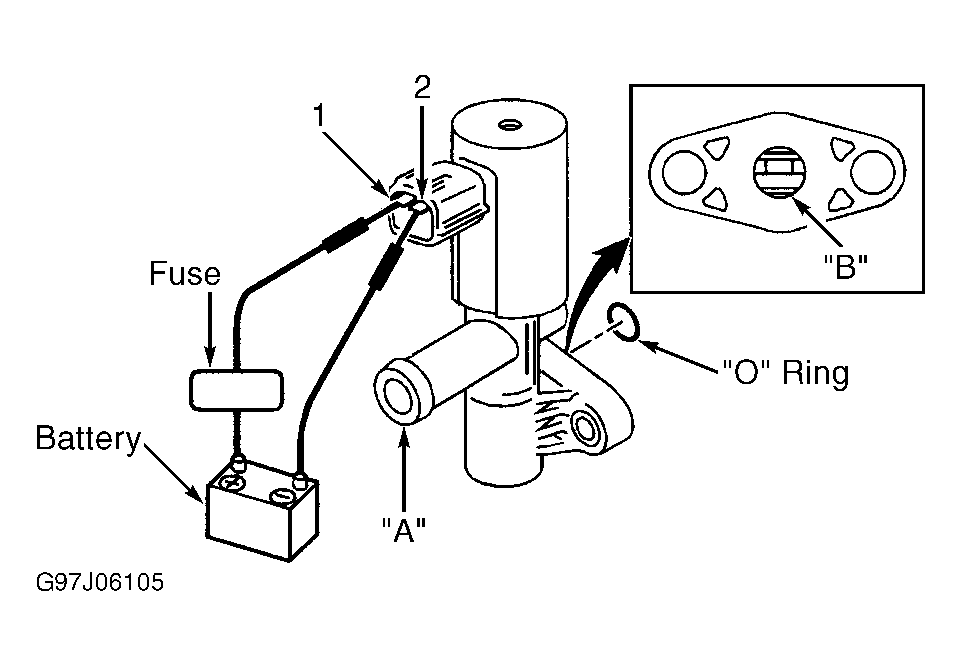 Courtesy of NISSAN MOTOR CO., U.S.A.